
Description
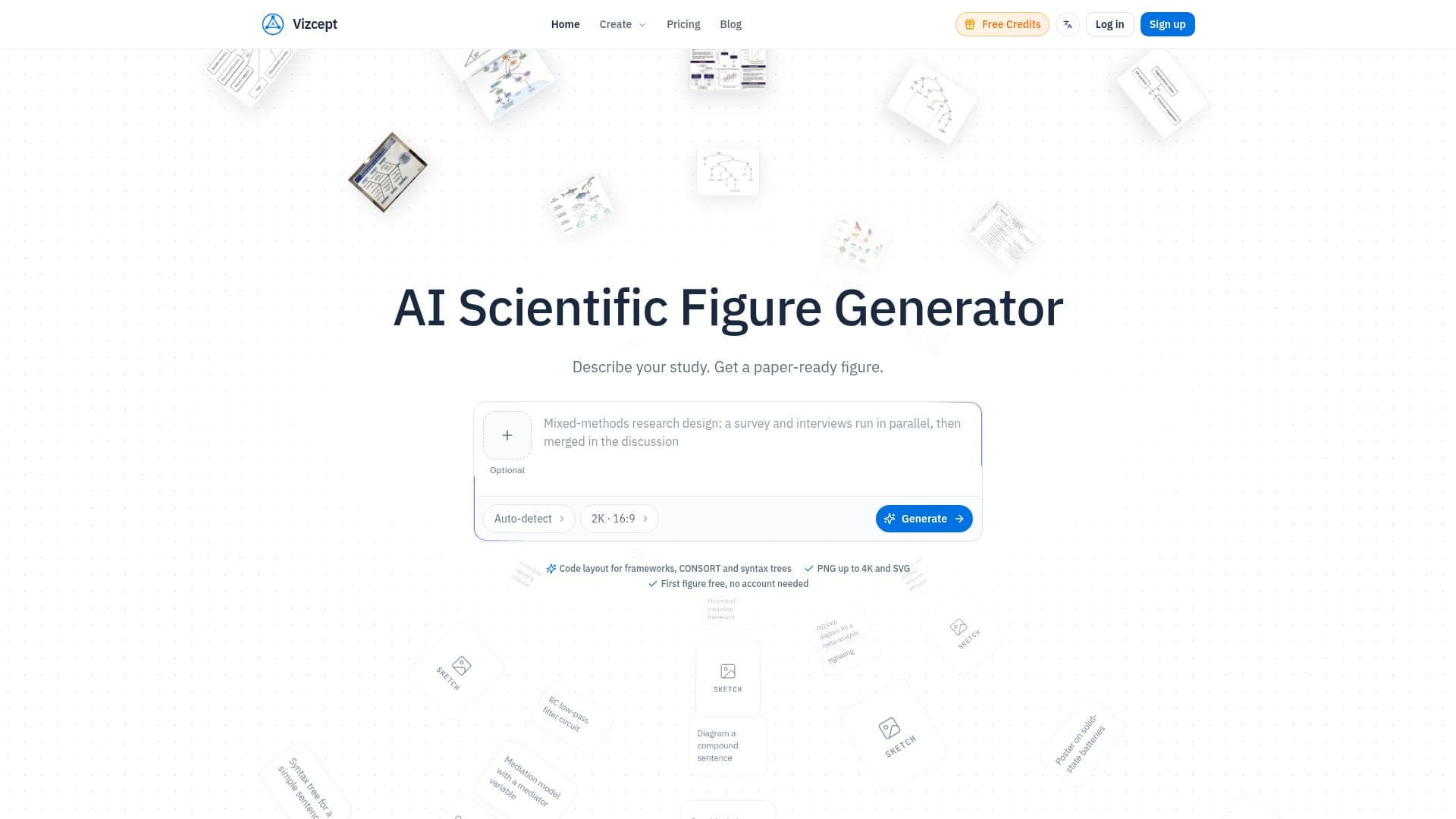
Vizcept is an AI scientific figure generator that assists master's and PhD students, researchers, and linguistics students in creating academic figures for theses, papers, posters, and grant proposals. The tool converts a written description of a study into a visual representation, such as conceptual frameworks, CONSORT flow diagrams, syntax trees, and sentence diagrams. For structure-critical figure types like conceptual frameworks, CONSORT flow diagrams, syntax trees, and sentence diagrams, Vizcept uses a language model to interpret the text into a structured format, then typesets the figure with code. This ensures precise placement of labels, arrows, and counts exactly as described.
Read More
For other figure types, including PRISMA diagrams and graphical abstracts, Vizcept employs an image model. Users are advised to review these figures carefully for accuracy in labels and numbers. The platform is not intended for general classroom clip art or experimental data images like western blots or micrographs, as publishers typically prohibit AI-generated data images. Vizcept emphasizes its role in creating explanatory figures, frameworks, workflows, and mechanisms.
Figures typeset by code are typically generated in under half a minute, while image-model figures take about a minute. Users can revise figures by editing their initial description and regenerating, or by using the Studio feature to mark areas for change. Every version of a figure is saved, allowing users to revert to previous iterations. Downloads are available in PNG (2K or 4K) and SVG formats. Code-typeset SVGs retain editable text, while image-model SVGs are traced from the image. Watermark-free files require a monthly plan or a credit pack.
Vizcept offers a freemium model, providing the first figure free without an account, and 5 credits upon sign-up, along with daily check-in credits. Watermarked downloads are free. Paid plans start from $14.90/month, and non-renewing credit packs are available from $19.90. The platform ensures that users own the figures they generate and that AI models are not trained on user descriptions or figures. Vizcept differentiates itself from tools like BioRender by generating figures from descriptions and using code for structural accuracy, rather than relying on manual arrangement or general AI image generation that may misplace elements.
- CategoryAI Research Assistants
- Pricing ModelFreemium
- DeploymentCloud
- PlatformsWeb
Vizcept's Core Features
AI Scientific Figure Generation from Text Descriptions
Code-Typeset Figures for Conceptual Frameworks
Code-Typeset Figures for CONSORT Flow Diagrams
Code-Typeset Figures for Syntax Trees
Code-Typeset Figures for Sentence Diagrams
Image Model Generation for Other Figure Types (e.g., PRISMA, Graphical Abstracts)
Fast Figure Generation (under 30 seconds for code-typeset)
Revision via Description Editing or Studio Mark-up
Version History for All Figures
PNG Export (2K and 4K resolution)
SVG Vector Export (editable text for code-typeset figures)
Freemium Access with Free Watermarked Downloads
Non-Renewing Credit Packs Available
User Ownership of Generated Figures
No AI Model Training on User Data
How to use Vizcept?
Describe Figure: Write a detailed description of the figure you need, including variables, hypotheses, trial arms, counts, or sentences to parse. Select the figure type, aspect ratio, and resolution.
Generate Figure: Vizcept processes your description. For conceptual frameworks, CONSORT flow diagrams, and syntax trees, a language model structures your text and code lays out the figure. Other types are drawn by an image model.
Review and Revise: Check the generated figure against your study for accuracy in labels, arrows, and numbers. Revise by modifying your description or using the Studio to mark specific areas for changes.
Export Figure: Download your paper-ready figure as a PNG for documents and slides, or as an SVG for further editing in software like Illustrator or Inkscape. Choose watermark-free options with a plan or credit pack.
Vizcept's Use Cases
- Thesis and Dissertation Writing
- Research Paper Preparation
- Grant Proposal Development
- Linguistics Coursework
- Academic Poster Design
- Conceptual Model Visualization
- Methodology Flowchart Creation
- Graphical Abstract Design