Description
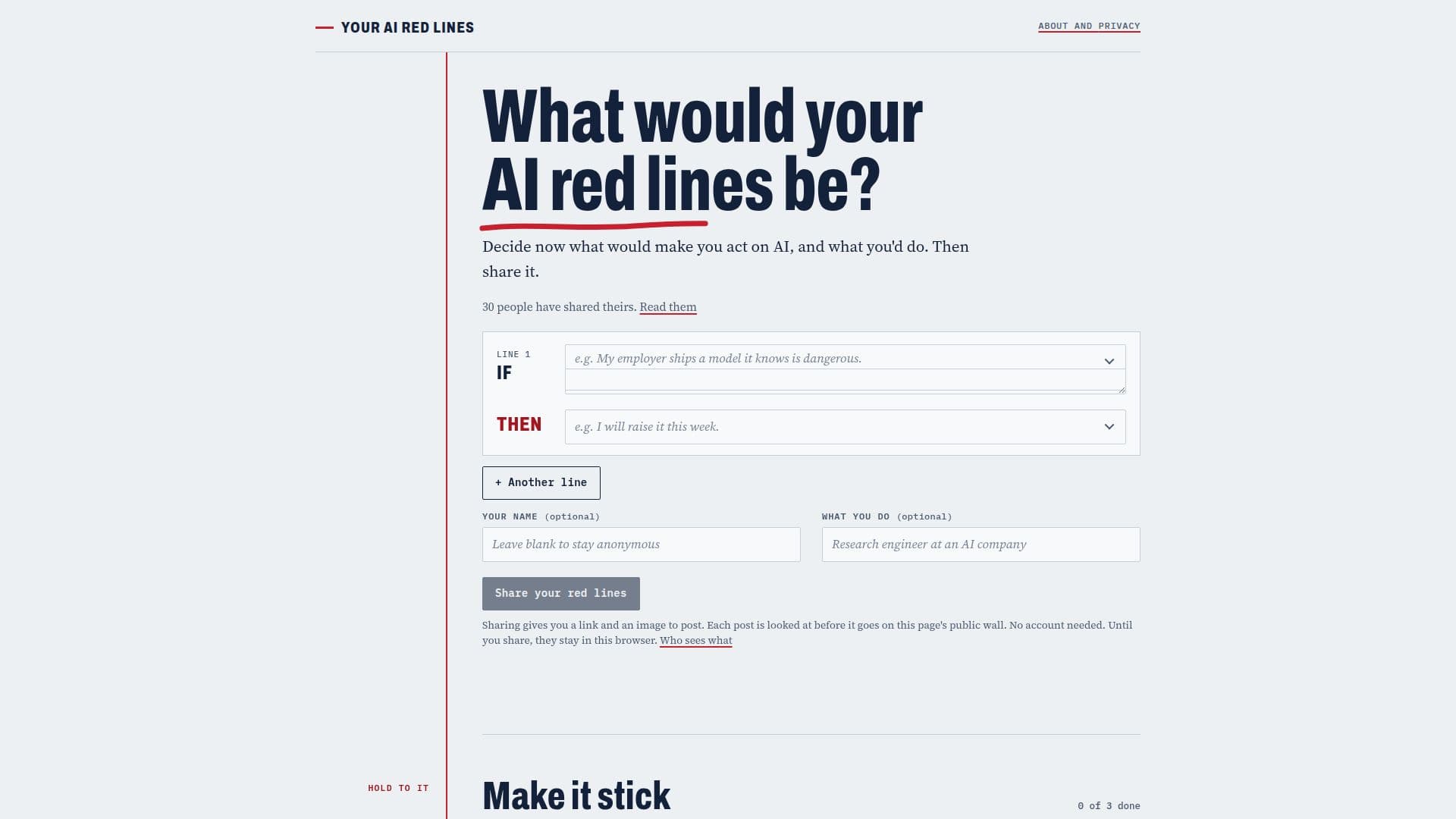
Your AI Red Lines provides a structured framework for individuals to articulate their personal ethical boundaries concerning artificial intelligence. The core concept involves users defining specific "red lines"—hypothetical situations or developments in AI that would compel them to take action. For each red line, users specify both the triggering condition ("If") and their intended response ("Then"), such as quitting a job, speaking publicly, or joining a campaign.
Read More
The platform emphasizes the importance of writing down these commitments to increase the likelihood of adherence. It integrates several features inspired by behavioral science research to help users maintain their resolve. These include the option to send their red lines to a trusted "witness" who can hold them accountable, setting recurring calendar reminders to re-read their commitments, and keeping a written record of their rationale and potential excuses.
Users can choose to keep certain red lines private while sharing others publicly on "The Wall," a section showcasing shared commitments from other users. This public sharing is moderated to ensure appropriate content. The site also offers a "Has it happened?" section where users can track real-world AI events and assess if any of their red lines have been crossed. For those who opt for monthly check-ins, the system can even use an AI (Claude by Anthropic) to suggest if a new event might cross a user's shared red lines, without sharing personal data.
Inspired by Joseph Rotblat, the only scientist to leave the Manhattan Project on grounds of conscience, Your AI Red Lines encourages proactive ethical reflection. The platform is an independent project run by Jonathan Hind, hosted on Google's Firebase. It offers robust privacy features, with drafts saved locally in the browser and optional AES-256 encrypted storage for multi-device access. Users retain control over what information is shared and with whom, ensuring a secure environment for personal ethical planning in the evolving landscape of AI.
- CategoryAI Privacy Tools
- Pricing ModelFree
- DeploymentCloud
- PlatformsWeb
Your AI Red Lines's Core Features
Define AI Red Lines: Users specify "If" conditions and "Then" actions related to AI ethics.
Private Red Lines: Option to keep certain commitments confidential.
Public Sharing: Share non-private red lines on "The Wall" for community visibility.
Witness Accountability: Send red lines to a trusted person for support and accountability.
Calendar Reminders: Set annual reminders to review red lines (Google Calendar, Outlook integration).
Written Record: Document reasons for commitments and potential excuses.
Multi-Device Sync: Optional Google sign-in for encrypted storage and access across devices.
Event Tracking: Monitor real-world AI events and assess if red lines are crossed.
Monthly Check-ins: Receive email reminders asking if a shared red line has been crossed.
AI-Assisted Event Matching: Claude AI can suggest if events might cross shared red lines (opt-in).
Data Privacy: Drafts saved locally in browser; encrypted storage for multi-device sync.
Moderated Public Wall: Shared red lines are reviewed before appearing publicly.
Shareable Links: Generate unique links for shared red lines.
Edit and Remove Shared Lines: Update or delete shared commitments from the wall.
Historical Context: Learn about Joseph Rotblat's ethical stand as inspiration.
How to use Your AI Red Lines?
Define Your Red Lines: Write down specific "If" scenarios related to AI and your "Then" actions.
Make it Stick: Follow steps like sending to a witness, setting reminders, and documenting your reasons.
Share Your Commitments: Optionally share non-private red lines publicly or with specific individuals.
Track AI Events: Monitor real-world AI developments and check if any of your red lines have been crossed.
Review and Act: Re-read your red lines annually and take action if a defined boundary is crossed.
Your AI Red Lines's Use Cases
- Personal AI Ethics Planning
- Professional Accountability
- Community Engagement
- Ethical Reflection
- Proactive Decision Making
- Witness-Based Support
- Tracking AI Incidents