
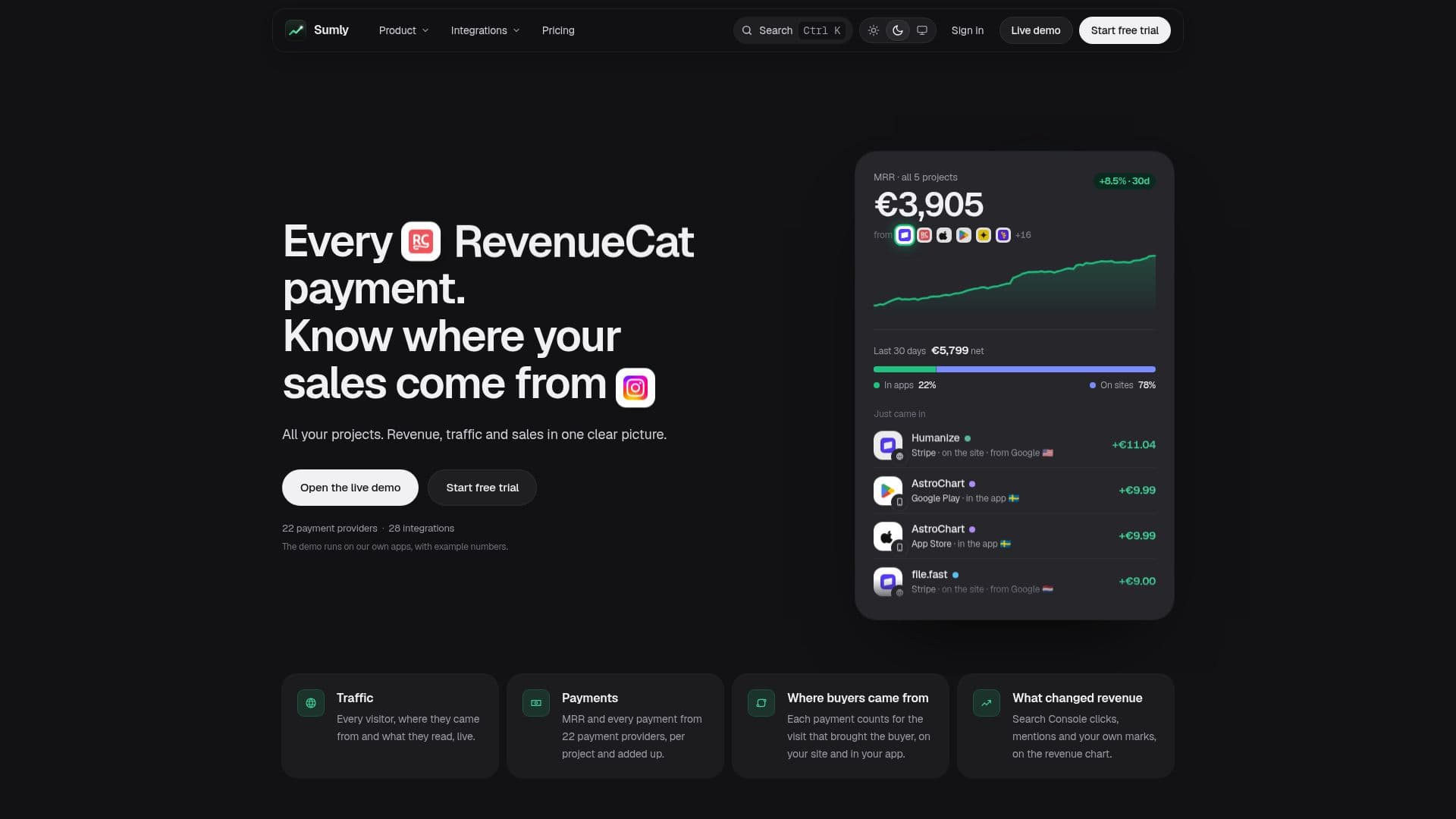
Description
Sumly offers a comprehensive analytics platform designed to consolidate revenue and visitor data from diverse sources into a single, clear interface. It integrates with 22 payment providers, including major platforms like Stripe, Paddle, Lemon Squeezy, Polar, Creem, RevenueCat, the App Store, and Google Play, alongside others such as Shopify, WooCommerce, PayPal, Gumroad, and Adapty. This allows users to see aggregated revenue, even from projects utilizing multiple payment gateways simultaneously, like Stripe for web and RevenueCat for in-app purchases.
Read More
The platform tracks website visitors using a lightweight, first-party script that respects privacy by not storing IP addresses. For mobile apps, Sumly focuses on payment data directly from app stores or RevenueCat. A key feature is its ability to attribute payments to the specific visit that led to a conversion, achieved by passing a visitor ID into the checkout process. This helps users understand which traffic sources drive actual sales.
Sumly also provides predictive analytics, estimating a visitor's likelihood to pay based on the behavior of past payers over 90 days, considering factors like device, system, browser, country, source, and visit duration. This estimated value helps identify high-potential visitors. Beyond revenue and traffic, Sumly allows users to track costs and calculate ROI for various campaigns, sponsors, and creators, linking expenses directly to the revenue they generate.
For financial reporting, Sumly generates monthly packages for accountants, consolidating data from all connected providers by project, country, and payout. It also integrates with Google Search Console to correlate revenue changes with search clicks and mentions. The platform offers a mobile app for iPhone and Android, providing real-time sales notifications, MRR, net revenue, and live visitor maps. Users can also ask questions in plain language, with an MCP connection enabling ChatGPT or Claude to analyze their numbers with permission.
Sumly emphasizes security, using read-only encrypted keys for payment providers and storing data on servers in Germany. It supports team collaboration with various roles and offers data import capabilities from other analytics tools like DataFast, Plausible, and OpenPanel, allowing users to migrate their historical data seamlessly.
- CategoryData & Analytics
- Pricing ModelFreemium
- DeploymentCloud
- PlatformsWeb, iOS, Android
Sumly's Core Features
Consolidated Revenue Dashboard
22 Payment Provider Integrations
Website Visitor Tracking Script
App Store & Google Play Revenue Tracking
Payment Attribution to First Visit
Visitor Likelihood to Pay Estimation
Cost & ROI Tracking by Source
Monthly Accountant Reports
Google Search Console Integration
Mobile App for iOS & Android
Real-time Sales Notifications
Live Visitor Map & Globe
Team Collaboration with Roles
Data Import from Other Analytics Tools
Read-only Encrypted API Keys
How to use Sumly?
Connect Payment Providers: Link Stripe, Paddle, RevenueCat, App Store, Google Play, and others with read-only keys to import up to three years of payment history.
Add Site Script: Insert one line of JavaScript into your website's head section to start tracking visitors, their origins, and tie visits to app store buttons.
Integrate Checkout: Pass the visitor ID into your checkout (e.g., Stripe metadata, Paddle custom data) to attribute payments to the original visit.
Connect App Stores: Integrate RevenueCat, App Store, or Google Play to track in-app purchases and link app installs to website visits.
Track Costs: Manually add expenses or import from files to tie costs to specific campaigns, sponsors, or creators for ROI analysis.
Ask Questions: Use the built-in chat or connect ChatGPT/Claude via MCP to get plain-word answers from your financial and visitor data.
Sumly's Use Cases
- Unified Revenue Tracking
- Visitor-to-Payment Attribution
- Subscription Metrics Analysis
- Marketing ROI Measurement
- App Revenue Monitoring
- Financial Reporting for Accountants
- Predictive Visitor Value
- Real-time Business Monitoring
- Historical Data Migration