Description
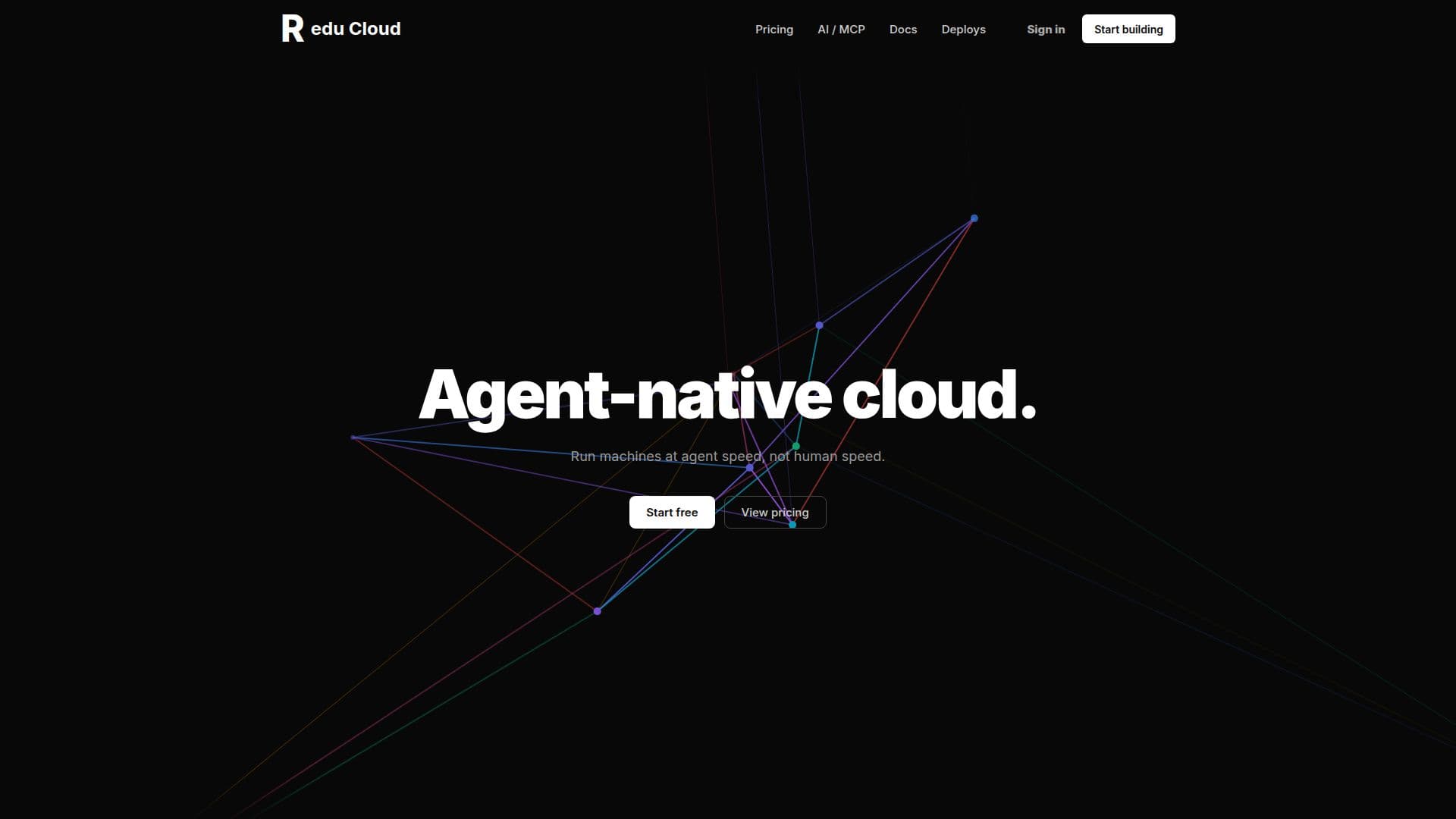
redu.cloud is an agent-native cloud platform that redefines how users interact with cloud infrastructure, emphasizing speed, reliability, and control. Unlike traditional cloud providers or PaaS solutions, redu.cloud offers direct access to real virtual machines, networks, and databases, which are managed and operated by AI agents. This approach allows users to run cloud operations at near-agent speed, significantly reducing waiting times and token usage, a feat previously considered impossible.
Read More
The platform enables agents to handle the entire lifecycle of a project, from initial deployment to live fixes. Users can connect their agents through the redu MCP (Master Control Program), which prepares a detailed deployment plan, including cost estimates, for review and approval. Once approved, the agent deploys the application to a live URL. Post-deployment, the same agent can modify configurations, scale capacity, read logs, and fix issues directly within the infrastructure, all while operating within the user's account and quota, with every step visible.
redu.cloud's infrastructure is built on its own stack, not as a reseller, offering real machines with no minimums. It includes a free tier with an always-on server and a Postgres database. The platform supports a wide array of use cases, including hosting SaaS applications, deploying open-source tools like Supabase and Gitea, managing private databases (PostgreSQL, Redis, Qdrant, ClickHouse, MySQL), and building private AI stacks with local models and vector search capabilities. It also facilitates autoscaling web applications behind load balancers and self-hosting internal tools like Uptime Kuma and Ghost.
Security is a core focus, with practices such as encryption in transit (TLS for all connections), encryption at rest (disk-level encryption in Germany), and robust access control based on the principle of least privilege. Customer accounts are isolated, API keys are hashed, and administrative access is restricted. The platform also provides infrastructure isolation, audit logging, and monitoring. While redu.cloud manages the security of the underlying platform, customers are responsible for operating system security, firewall configurations, access management for their teams, and data backup within their instances. The platform offers a pay-as-you-go model, billed hourly with no minimums, and a free tier to get started.
- CategoryAI DevOps & Cloud Tools
- Pricing ModelFreemium
- DeploymentCloud
- PlatformsWeb
redu.cloud's Core Features
Agent-native cloud operations
Deploy, scale, and configure via AI agents
Real virtual machines, networks, and databases
Costed deployment plans for review and approval
Automated incident fixing and log reading by agents
Always-on free server and Postgres database
Support for open-source application deployments
Managed databases (PostgreSQL, Redis, Qdrant, ClickHouse, MySQL)
Private network for app-database communication
Self-host private AI stacks with local models
Autoscaling web applications with load balancers
Self-host internal tools like monitoring and analytics
Encryption in transit (TLS) and at rest
Customer account and infrastructure isolation
Hourly, pay-as-you-go pricing with no minimums
How to use redu.cloud?
Connect Agent: Point your AI agent at the redu MCP.
Provision Project: Give your agent your project to prepare a deployment plan with costs.
Review & Approve: Review the deployment plan and cost, then approve it.
Deploy Application: Your agent deploys the application to a live URL.
Manage & Scale: Ask the same agent to change configuration or add capacity.
Fix Incidents: If something breaks, your agent reads logs and fixes it in place with your steering.
redu.cloud's Use Cases
- SaaS Hosting
- Open-Source Tool Deployment
- Managed Private Databases
- Private AI Stack Hosting
- Autoscaling Web Applications
- Internal Tool Self-Hosting
- Staging Environments
- Edge Workloads