Description
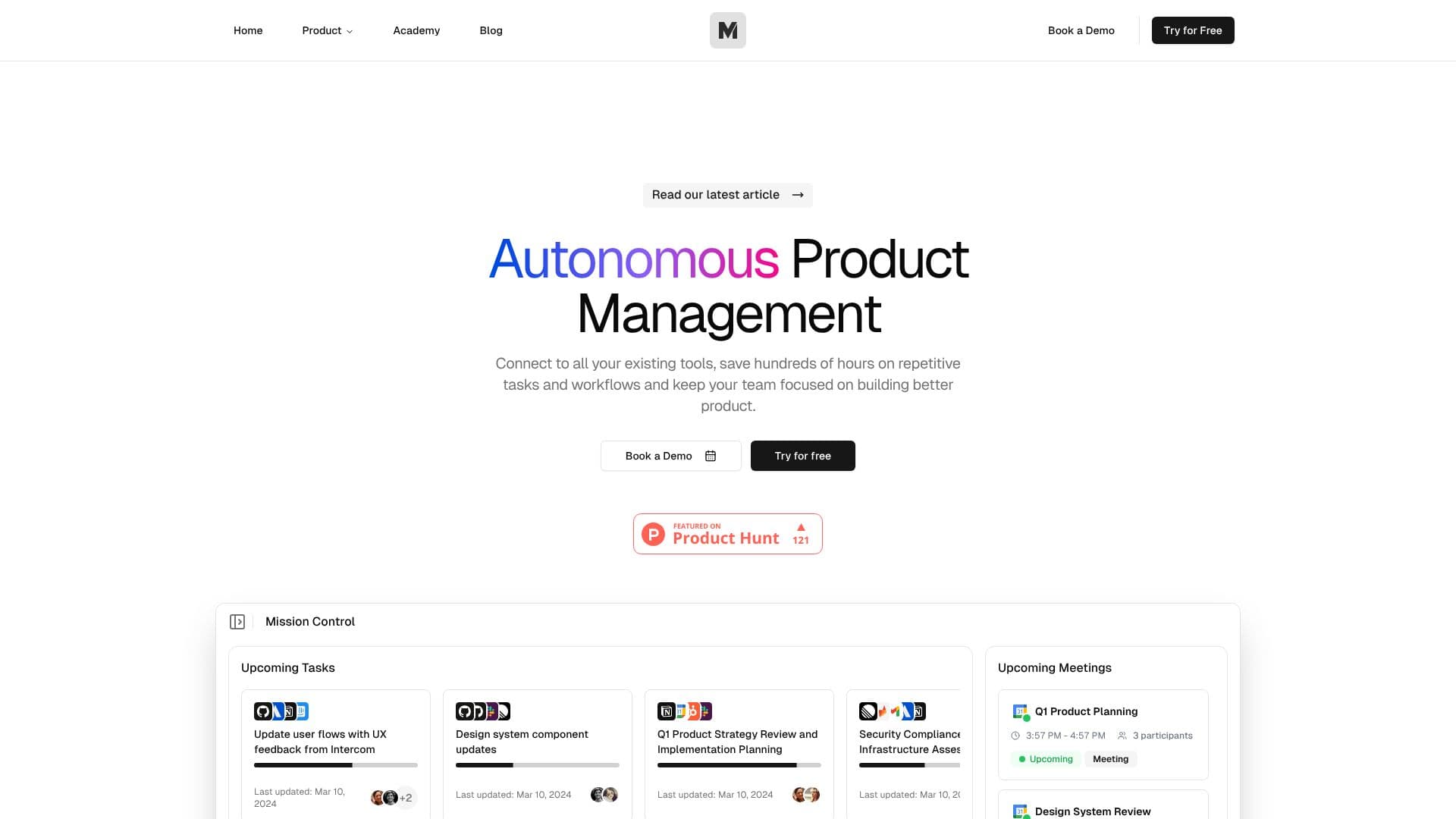
Missio provides an AI-powered platform designed to streamline product management workflows. It acts as a central "mission control" for modern product teams, offering real-time visibility across all connected tools, activities, and automated workflows. This unified dashboard ensures that no critical task or update is missed, significantly reducing the risk of oversight.
Read More
The platform's core functionality revolves around autonomous task creation and an AI Product Copilot. It automatically generates and organizes tasks from various communication channels, including Slack, email, and meeting transcripts. By analyzing conversations, Missio can identify action items, assign priorities, and delegate tasks without manual intervention. The AI Product Copilot assists in executing complex workflows, such as analyzing customer feedback, scheduling follow-ups, and managing sprint cycles, thereby accelerating execution.
Missio's Meeting Intelligence feature automatically records, transcribes, and extracts action items from meetings, converting them into actionable tasks. This eliminates the need for manual note-taking and follow-up. Furthermore, its Cross-Platform Orchestration capabilities allow seamless integration with popular tools like Slack, Linear, Jira, and HubSpot. This enables users to maintain context and execute actions across different platforms without constant tool-switching, saving valuable time and reducing cognitive load.
The target audience for Missio includes product managers, product teams, and engineering leads who are looking to enhance efficiency and focus on strategic product development. By automating mundane and repetitive tasks, Missio empowers teams to dedicate more time to innovation, strategy, and building high-quality products. The platform aims to transform how product teams operate by reducing tool overload and task management overhead.
Missio's value proposition lies in its ability to automate workflows, connect disparate tools, and save teams hundreds of hours weekly. It helps in building better products faster by ensuring that the team remains focused on core development activities rather than getting bogged down in administrative tasks. The platform is positioned as an essential tool for modern product teams seeking to optimize their operational efficiency and product delivery.
- CategoryAI Project Management
- Pricing ModelTry for free
- DeploymentCloud
- PlatformsWeb
Missio's Core Features
Autonomous task creation from conversations across Slack, email, and meetings.
AI Product Copilot for handling complex workflows and task execution.
Meeting Intelligence: automatic recording, transcription, and action item extraction.
Cross-Platform Orchestration connecting Slack, Linear, Jira, HubSpot, and more.
Unified dashboard for real-time visibility across all tools and activities.
Automated task organization with context, priority, and assignments.
User flow updates based on UX feedback from integrated tools.
Design system component updates managed through the platform.
Product strategy review and implementation planning support.
Security compliance audit and infrastructure assessment tracking.
Activity feed for tracking deals, tasks, and project milestones.
Upcoming task and meeting management.
Integration with communication tools for task generation.
How to use Missio?
Connect your tools: Integrate Missio with your existing platforms like Slack, Jira, and HubSpot.
Automate workflows: Configure Missio to automatically create and manage tasks from your communications.
Leverage AI Copilot: Use the AI assistant to handle complex tasks and analyze data.
Monitor your dashboard: Gain real-time visibility into all product management activities.
Review meeting intelligence: Utilize transcribed meetings and extracted action items.
Focus on product building: Redirect saved time towards strategic development and innovation.
Missio's Use Cases
- Automated Task Management
- Meeting Action Item Extraction
- Cross-Platform Workflow Automation
- Customer Feedback Analysis
- Product Strategy Planning
- Engineering Task Generation
- UX Feedback Integration
- Design System Management