
Description
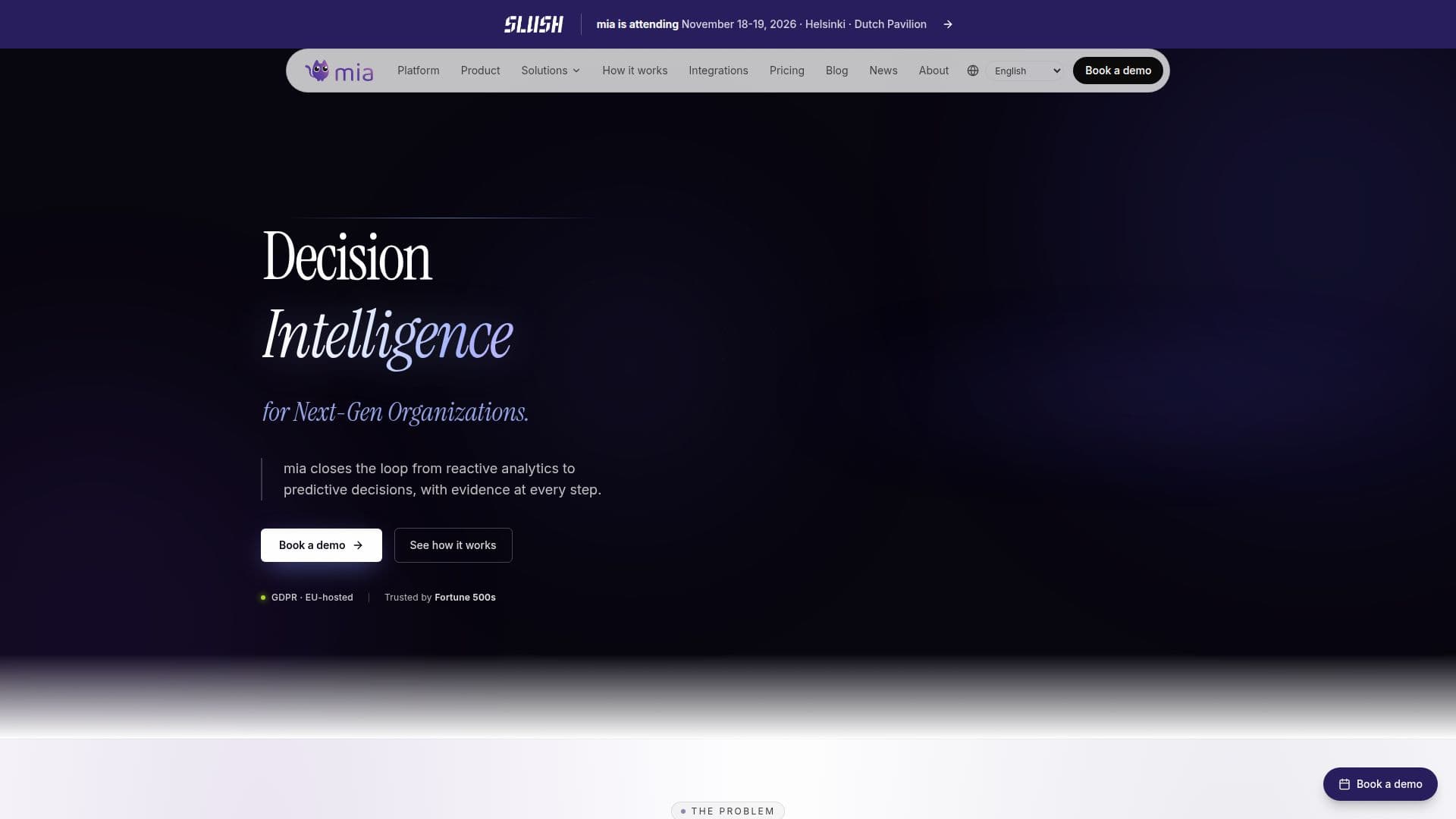
mia is a decision intelligence layer designed for next-generation organizations. It unifies customer, competitor, and market signals into a single source of truth, transforming them into ranked, source-cited decisions. This tool is particularly beneficial for product, marketing, growth, sales, customer experience, and strategy teams, enabling them to make informed decisions quickly.
Read More
mia integrates with over 100 tools, including Salesforce, HubSpot, Gong, Slack, and more, ensuring seamless data flow from existing systems. It does not replace CRM or BI tools but enhances them by providing actionable insights. The implementation process is swift, with most teams going live in under two weeks.
Security is a priority for mia, with data encryption in transit and at rest, support for SSO and SCIM, and ISO 27001 certification in progress. Pricing is customized based on the number of seats and connected systems, with a guided pilot available to measure impact before full deployment.
mia is trusted by Fortune 500 companies and is designed to close the loop from reactive analytics to predictive decisions. It continuously collects and synthesizes signals, providing ranked opportunities and risks, and recommending the next best actions for teams. This approach helps organizations move from scattered data to compounding business outcomes, making mia an essential tool for decision-making in dynamic environments.
- CategoryBusiness Intelligence
- Pricing ModelCustom
- DeploymentCloud
- PlatformsWeb
mia's Core Features
Unifies customer, competitor, and market signals
Provides ranked, source-cited decisions
Integrates with over 100 tools
Supports SSO and SCIM
Custom pricing based on seats and systems
Guided pilot available
Data encryption in transit and at rest
ISO 27001 certification in progress
How to use mia?
Connect: Integrate with existing tools
Synthesize: Unify and deduplicate signals
Rank: Prioritize opportunities and risks
Act: Implement recommended actions
mia's Use Cases
- Customer Feedback Analysis
- Competitor Monitoring
- Market Trend Analysis
- Sales Strategy Optimization
- Product Development