Description
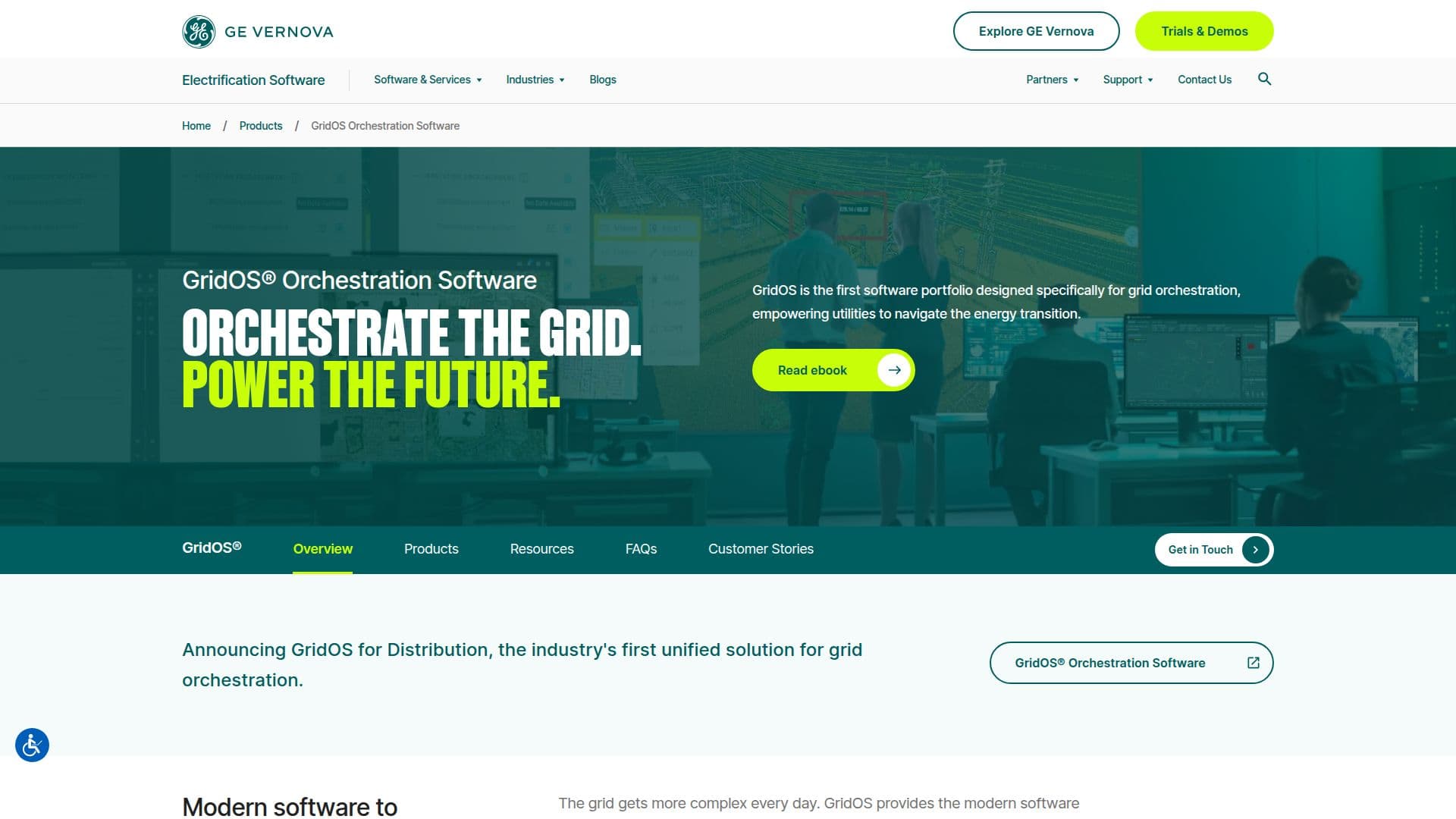
GE Vernova GridOS is a pioneering software portfolio specifically crafted for grid orchestration, enabling utilities to navigate the complexities of transitioning to a sustainable energy grid. The software facilitates the integration of renewable energy sources, allowing for up to 70% renewables penetration, and helps utilities avoid up to 40% in inertia management costs, as demonstrated in a project with NG ESO in the UK.
GridOS leverages advanced technologies such as AI and machine learning to address the biggest challenges faced by utilities today. It transforms dark data into valuable insights, enhancing grid connectivity, visibility, and control. The software is recognized as a leader in grid software, with accolades from Guidehouse Insights and IDC for its Distributed Energy Resources Management System (DERMS) capabilities.
The GridOS suite includes various products like Network Operations Software and Geo Network Management, which optimize energy supply, improve reliability, and reduce costs. It also features the Grid Data Fabric, which unlocks an intelligent power grid by accessing and leveraging energy data for a more sustainable and resilient grid.
GE Vernova GridOS is ideal for utilities looking to modernize their grid operations, integrate distributed energy resources, and achieve full situational intelligence across their networks. It is a critical tool for utilities aiming to build a cleaner, more reliable, and affordable energy future.
GE Vernova GridOS's Core Features
Grid orchestration for sustainable energy
AI and ML integration
Up to 70% renewables penetration
40% reduction in inertia management costs
DERMS capabilities
Network Operations Software
Geo Network Management
Grid Data Fabric for energy data access
How to use GE Vernova GridOS?
Configure: Set up grid orchestration parameters
Use: Monitor and manage grid operations
Optimize: Integrate AI/ML for improved efficiency
Leverage: Utilize data insights for decision-making
GE Vernova GridOS's Use Cases
- Renewable Integration
- Cost Management
- Data Utilization
- Grid Modernization
- AI/ML Integration