
Description
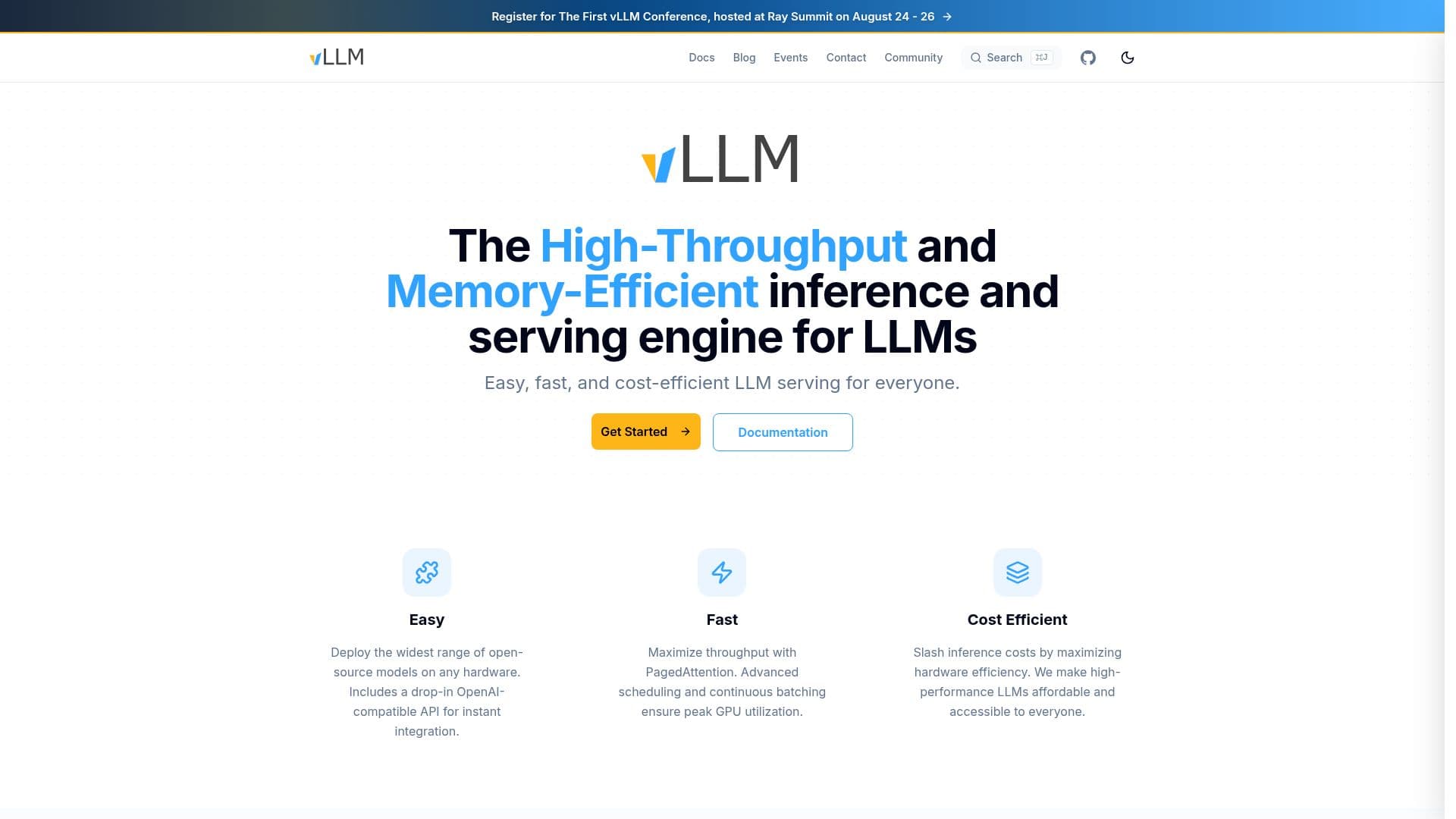
vLLM is designed to optimize the inference and serving of Large Language Models (LLMs) with a focus on high throughput and memory efficiency. This engine leverages advanced techniques such as optimized GEMM/MoE kernels for various precisions, utilizing frameworks like CUTLASS and TRTLLM-GEN. The goal of vLLM is to provide a seamless experience for deploying AI models, ensuring that users can achieve state-of-the-art performance without the complexities typically associated with LLM serving.
Read More
The platform is built for universal compatibility, allowing it to integrate with various hardware configurations, including support for NVIDIA GPUs, AMD GPUs, and Google TPUs. This flexibility makes vLLM an ideal choice for developers and organizations looking to implement AI solutions across different environments. Users can quickly start using vLLM with minimal setup, thanks to its straightforward configuration process.
vLLM also offers a community-driven approach, with forums available for users to discuss topics ranging from hardware support to model integration. This collaborative environment fosters knowledge sharing and helps users optimize their use of the platform. Additionally, vLLM supports a wide range of models, including popular architectures like Llama, BART, and GPT, among others.
In summary, vLLM stands out as a powerful tool for anyone looking to deploy LLMs efficiently. Its combination of performance, ease of use, and community support positions it as a valuable resource in the rapidly evolving field of AI.
- CategoryMLOps & Model Deployment
- Pricing ModelOpen Source
- DeploymentCloud
- PlatformsNVIDIA, AMD, Google TPU
vLLM's Core Features
High Throughput
Memory Efficient
Universal Compatibility
Optimized GEMM/MoE Kernels
Support for Multiple Hardware
Community Forums
Quick Start Configuration
Wide Model Support
How to use vLLM?
Configure: Set up your hardware environment to support vLLM.
Install: Follow the installation instructions provided in the documentation.
Deploy: Load your desired AI model into the vLLM engine.
Optimize: Adjust configurations for performance based on your specific use case.
vLLM's Use Cases
- AI Model Deployment
- Performance Optimization
- Community Engagement
- Custom Model Integration
- Cross-Platform Compatibility