
Description
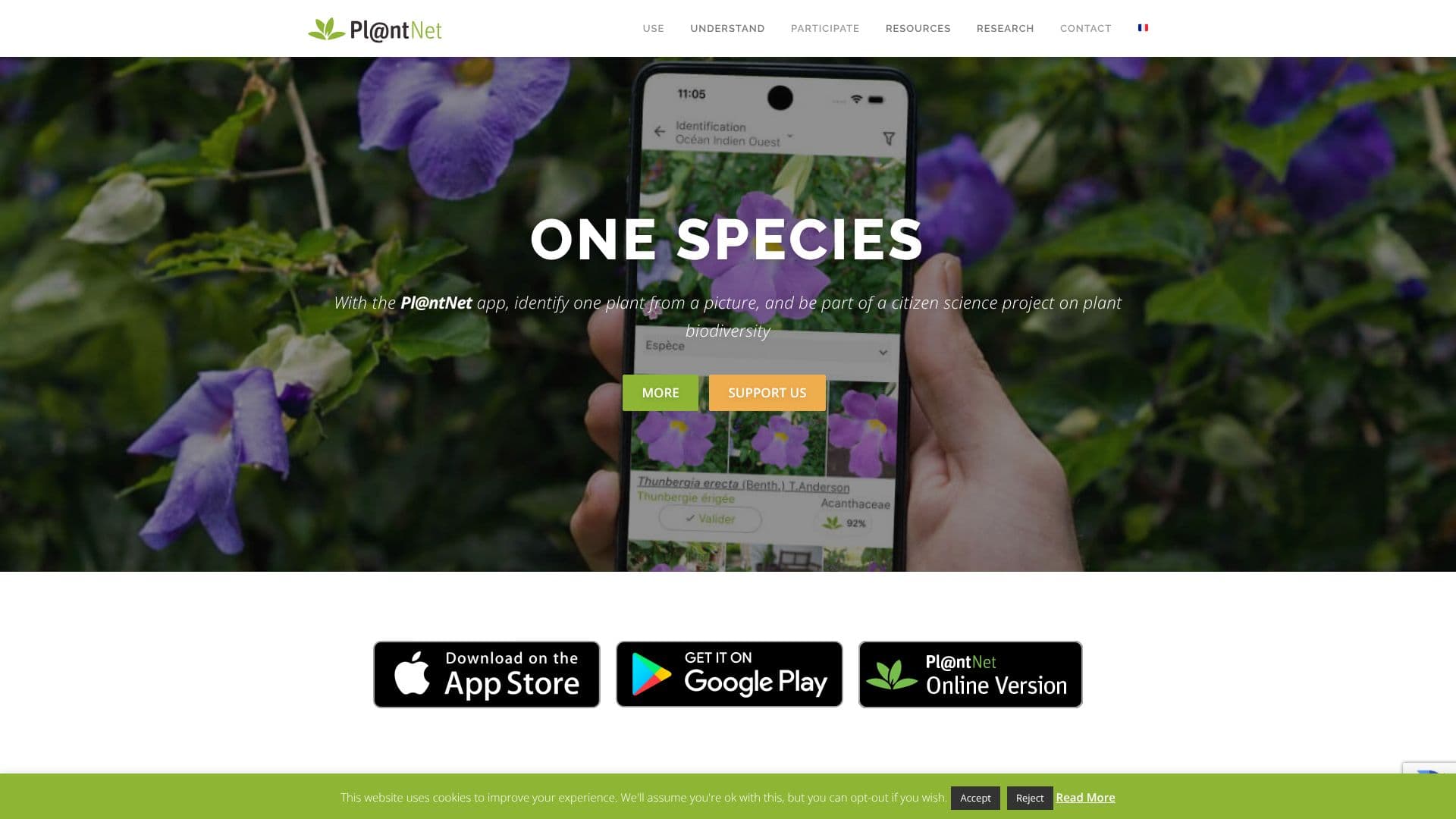
Pl@ntNet is a unique citizen science project that empowers individuals to identify plant species using their smartphone cameras. Available as a user-friendly app, it transforms everyday observations into valuable scientific data. The core functionality revolves around submitting a photograph of a plant, which the Pl@ntNet system then analyzes to identify the species. This process is designed to be accessible to everyone, regardless of their botanical expertise.
Read More
Beyond simple identification, Pl@ntNet fosters a collaborative environment where users contribute to a vast, ongoing project focused on plant biodiversity. By sharing their observations, users become active participants in scientific research, helping to map and understand plant life across different regions. The platform emphasizes the importance of this shared data, explaining how it aids in scientific discovery and conservation efforts. Users are encouraged to become responsible citizens by contributing to this collective knowledge base.
The project is structured around several key components, including its widely recognized plant identification system. However, it also encompasses initiatives like "Microprojects," which allow for more focused research on specific geographical areas or thematic collections, such as useful plants. These microprojects operate on a different scale than the broader projects, enabling deeper dives into particular botanical subjects. The platform also engages in "One Forest Vision" initiatives, expanding its reach into new regions and providing training on application usage.
Pl@ntNet is committed to remaining open and free for everyone, relying on community support through donations and participation. The platform also offers an API that has facilitated over 100 million identifications, showcasing its significant impact and reach. The team actively engages with researchers and institutions, as evidenced by collaborations with organizations like MILA (Montréal Institute for Learning Algorithms) and participation in projects like CoForFunc. This collaborative spirit underscores Pl@ntNet's role in advancing botanical research and public engagement with plant science.
- CategoryComputer Vision Tools
- Pricing ModelFree
- DeploymentCloud
- PlatformsWeb, iOS, Android
Pl@ntNet's Core Features
Plant identification from user photos
Citizen science project on plant biodiversity
Contribution to a global plant database
User-submitted observations for research
Identification of plant species
Microprojects for focused research
One Forest Vision initiatives
API for over 100 million identifications
Community-driven data collection
Educational resource for plant identification
How to use Pl@ntNet?
Take a photo of a plant
Submit the photo to the Pl@ntNet app
Receive plant identification results
Share your observation to contribute data
Explore plant biodiversity data
Pl@ntNet's Use Cases
- Plant identification
- Biodiversity monitoring
- Citizen science participation
- Botanical education
- Field research support
- Personal plant cataloging