
Description
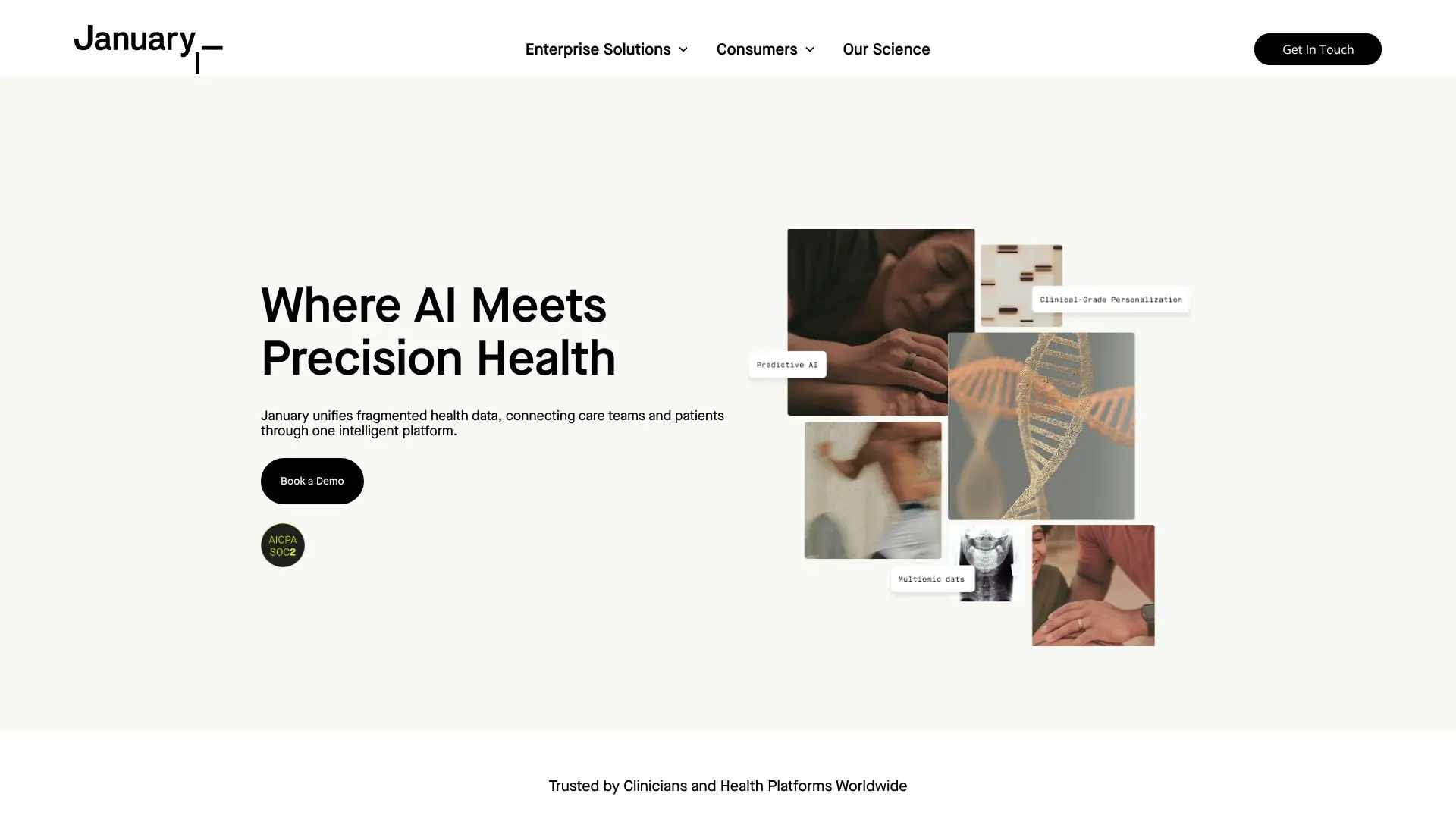
January AI now positions itself as health intelligence infrastructure rather than a direct-to-patient platform. Its site is built around a single API that lets developers and companies add nutrition, metabolic, and longitudinal health intelligence into their own products, instead of asking clinicians and patients to use January's own interface directly.
Read More
At the center of the platform is the Health Context Engine, which normalizes fragmented health data, clinical records, lab results, medication histories, wearable data, and nutrition logs, into one longitudinal record per person, then reasons across it using clinical evidence to return traceable insights. This engine is exposed through APIs for outside developers, and also powers January's own Clinician Nutrition Monitor and its consumer app.
January cites peer-reviewed validation for its accuracy: results published in npj Digital Medicine, a Nature Portfolio journal, report that its Meal Scan feature outperforms frontier LLMs on food recognition, and that the Health Context Engine scores 88% on endocrine board exam questions with a 0.8% hallucination rate. The Clinician Nutrition Monitor is qualified on the Mayo Clinic Platform and runs inside the Epic patient chart. The company states it is SOC 2 Type 2 and HIPAA compliant.
The same infrastructure powers January's own consumer app, which the company cites as producing measurable outcomes among real users: 74.4% of participants lost weight while using it, time in a healthy glucose range for people with type 2 diabetes rose from 49.7% to 57.4%, and sugar intake fell 16.7%. January AI is aimed at digital health and coaching platforms, GLP-1 and weight management programs, preventive and longevity health products, and clinicians and health systems that want to add this intelligence to their own tools rather than build it themselves. A disclaimer notes the platform's claims have not been reviewed by the FDA and it is not intended to diagnose, treat, or prevent disease.
- CategoryMedical & Clinical AI
- DeploymentCloud
- PlatformsWeb
January AI's Core Features
Health Context Engine unifying clinical, wearable, and nutrition data into one longitudinal profile
Meal Scan feature for food and nutrition recognition
API access for developers to integrate health intelligence into their own products
Clinician Nutrition Monitor, qualified on the Mayo Clinic Platform and integrated with Epic
Peer-reviewed validation published in npj Digital Medicine
88% accuracy on endocrine board exam questions with a 0.8% hallucination rate
SOC 2 Type 2 and HIPAA compliance
January consumer app as a reference implementation of the platform
How to use January AI?
Get an API key: Sign up and generate an API key for the platform.
Integrate Meal Scan: Add nutrition and meal recognition to your own app via the API.
Add glucose predictions: Integrate January's glucose prediction endpoints where relevant.
Scope a deployment: Talk to January's team about a platform, white-label, or clinical deployment.
Review the reference app: Try the January consumer app to see the infrastructure in use.
January AI's Use Cases
- Digital health platform integration
- GLP-1 and weight management support
- Clinical nutrition monitoring
- Longevity and preventive health