Description
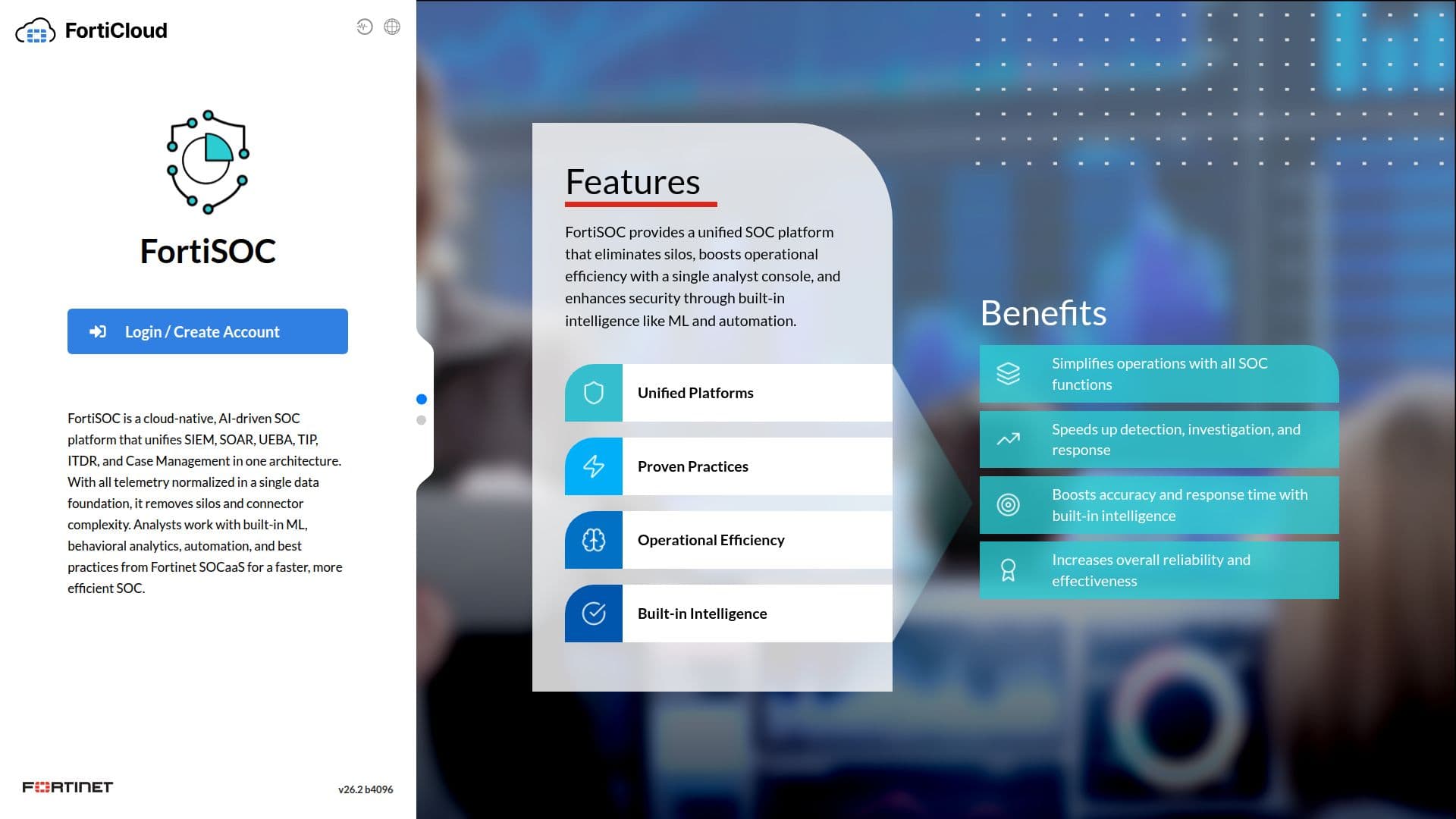
FortiSOC is an advanced, cloud-native SOC platform designed to unify various security operations components such as SIEM, SOAR, UEBA, TIP, ITDR, and Case Management into a single architecture. This integration allows for the normalization of all telemetry data into one cohesive data foundation, effectively eliminating silos and reducing the complexity associated with multiple connectors. By providing a single analyst console, FortiSOC enhances operational efficiency and streamlines security operations.
The platform is AI-driven, incorporating machine learning and behavioral analytics to provide enhanced security insights and automation. These capabilities are complemented by best practices derived from Fortinet's SOC as a Service (SOCaaS), ensuring that security analysts can work more efficiently and respond to threats more quickly.
FortiSOC's unified approach not only boosts operational efficiency but also enhances security through built-in intelligence. The platform's automation features help reduce the manual workload on security teams, allowing them to focus on more strategic tasks. Additionally, the use of machine learning and behavioral analytics provides deeper insights into potential threats, enabling more proactive security measures.
Overall, FortiSOC is designed for security operations centers looking to improve their efficiency and effectiveness. By unifying various security components and leveraging advanced AI capabilities, FortiSOC offers a comprehensive solution for modern security challenges.
FortiSOC's Core Features
Cloud-native SOC platform
Unifies SIEM, SOAR, UEBA, TIP, ITDR, and Case Management
Single data foundation for normalized telemetry
Built-in machine learning and behavioral analytics
Automation capabilities
Best practices from Fortinet SOCaaS
Single analyst console
Enhanced operational efficiency
How to use FortiSOC?
Configure: Set up the unified SOC platform
Use: Leverage built-in ML and automation
Optimize: Enhance security operations with best practices
FortiSOC's Use Cases
- Security Operations
- Threat Detection
- Incident Response
- Data Normalization
- Operational Efficiency